How to Choose Art You’ll Love for Years
Choosing art feels harder than it should.
Not because there aren’t enough options but because there are too many voices telling you what’s right, what’s timeless, what’s safe, and what will hold its value.
So we all second-guess ourselves and default to things that feel neutral or socially approved.
Then we wonder why the art we chose never quite lands.
Honestly, choosing art isn’t about rules or perfect taste. It’s about asking better questions and trusting the answers.
Here’s how to choose art that actually lasts.
1. Stop asking “Do I like it? and ask this instead
Liking something isn’t enough. What you really want to ask is:
“Would I still want to live with this if no one else ever saw it?”
A lot of art purchases are social decisions disguised as personal taste. We buy things because they feel current or clever or because we think other people will like them.
But art that lasts usually connects on a quieter level. It reminds you of a place you’ve been or a phase of life or something you’re drawn to but can’t quite explain.
If the main appeal is that it would look good on Instagram, it probably won’t age well in your home.
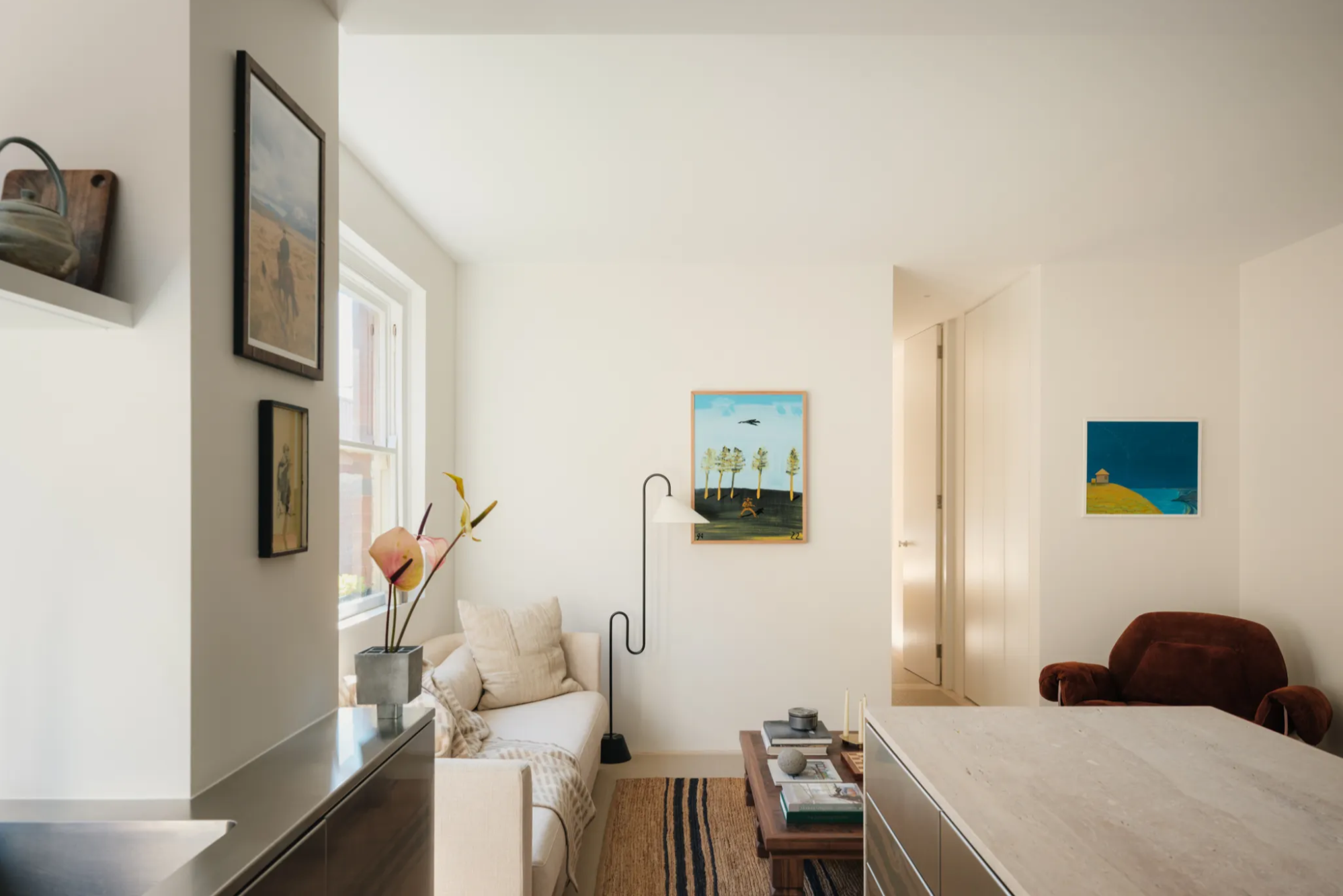
Photo by Clinton Weaver
2. Mood beats colour every time
People obsess over whether art matches their room, but this is the wrong focus.
The real question is whether it matches the emotional temperature of the space.
Is it calm or energetic?
Heavy or light?
Does it pull you in or keep you at arm’s length?
The mood should align, not the colours. The moment your art perfectly matches your cushions, it usually stops saying anything interesting.
CALM vs ENERGETIC
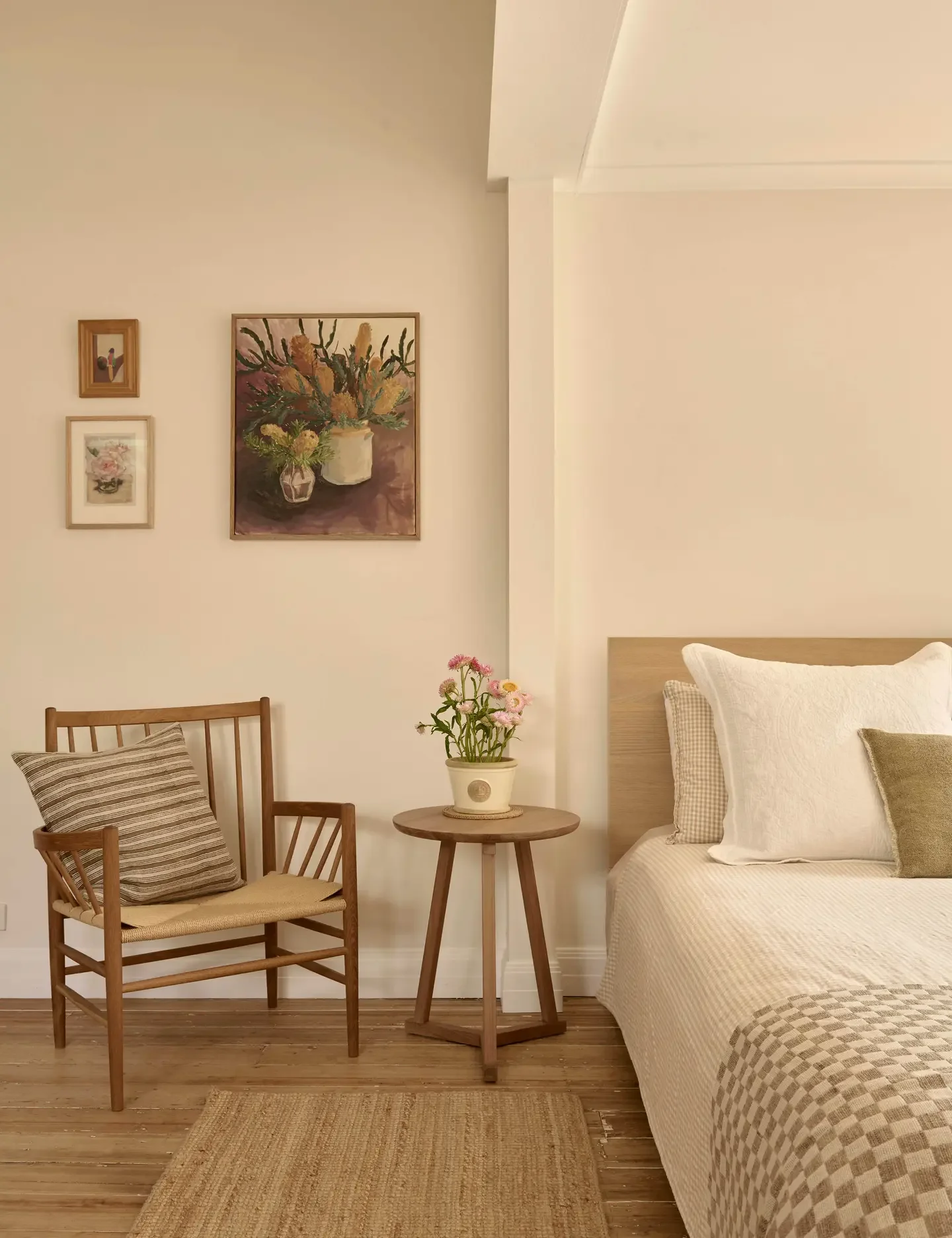
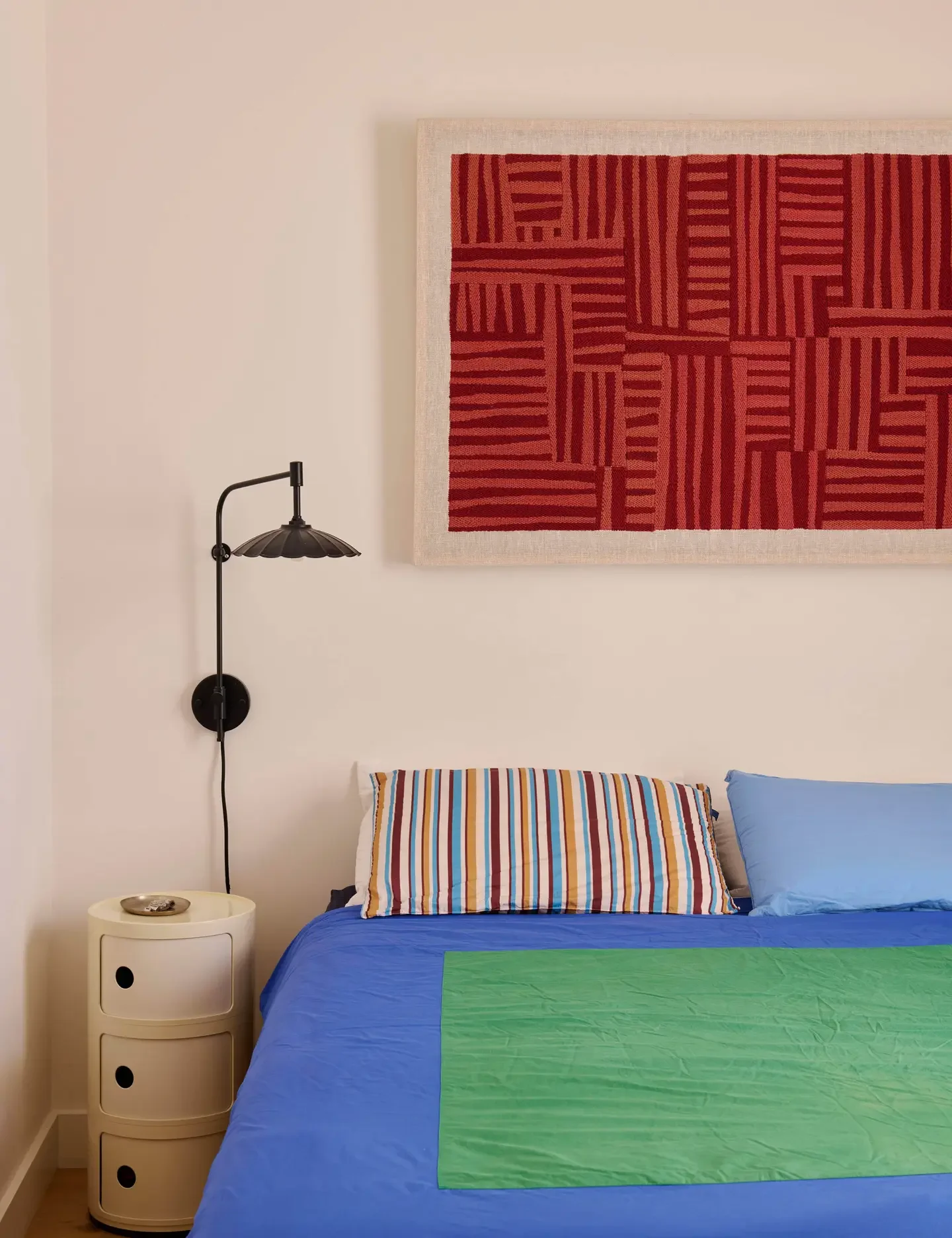
Photo by Eve Wilson
3. Bigger is better
You can have incredible taste and still end up with art that feels off simply because it’s the wrong size or in the wrong spot.
These are the principles you should be following:
Err bigger than you think. Small art is the most common mistake I see - it reads as cautious and leaves a wall feeling unfinished. A single larger piece will almost always feel more intentional than several smaller ones competing for attention!
When art sits above furniture (a sofa, sideboard, bed), it should feel connected, not like it’s hovering. Aim for the artwork to be around half to two-thirds the width of the piece below it. Never wider.
Distance matters. Leave roughly 15-25cm (6-10”) between the bottom of the frame and the top of the furniture beneath it. Anything higher and the art starts to float, which instantly makes a room feel unresolved.
Eye level is still a thing. Galleries hang art with the centre at about 150cm (57-60”) from the floor because that’s where most people naturally look.
On an empty wall, think in percentages. Art should usually occupy around 60-75% of the available wall width. Less than that, and the wall wins. More than that, and the room can start to feel crowded.
👇 This artwork is a great example of following these rules!
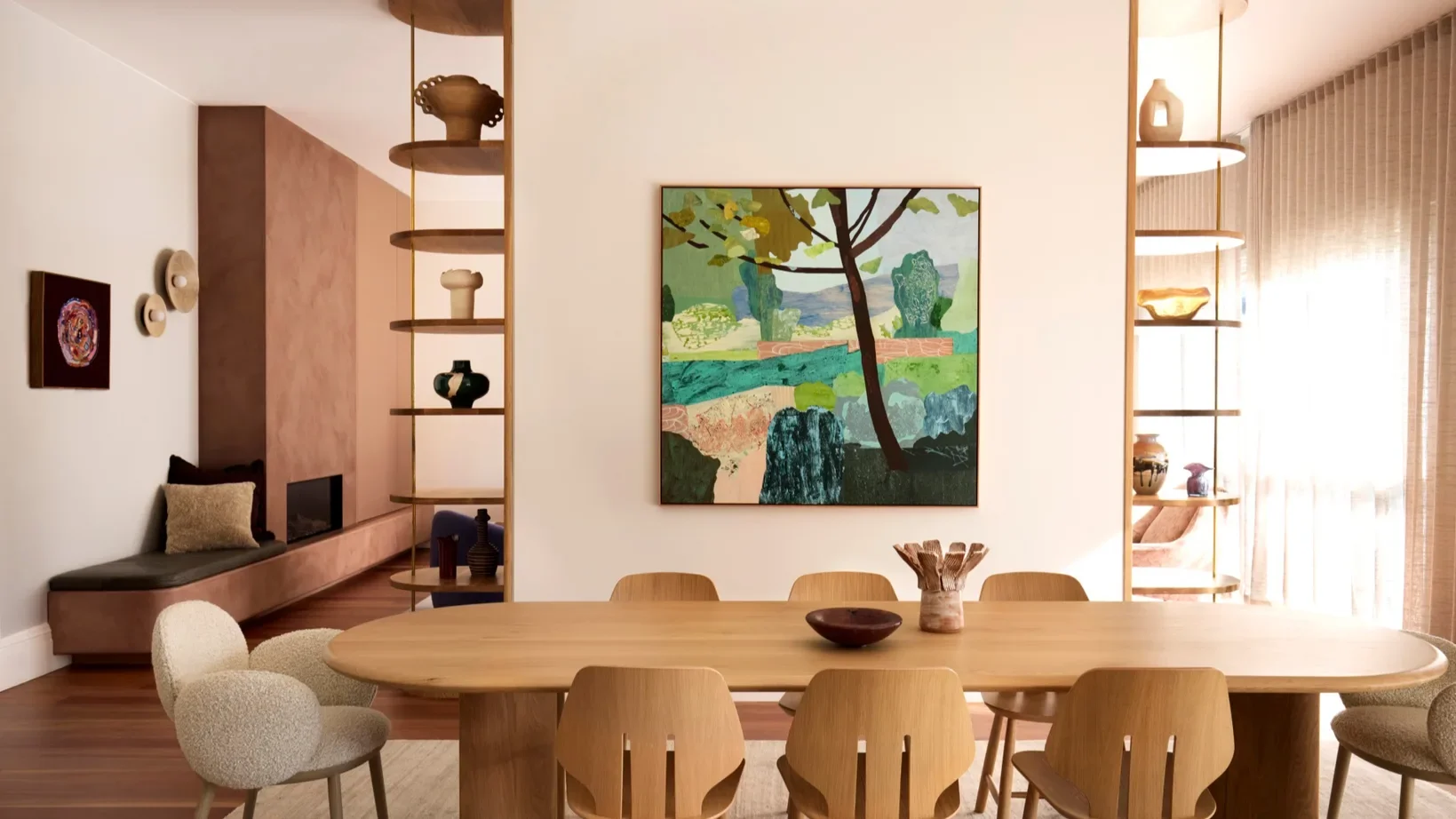
Photo by Prue Ruscoe
4. Don’t treat art as the finishing touch
Most people treat art as the finishing touch. The thing you add once the sofa has been chosen, the rug is locked in, and the walls are painted.
Some of the most compelling homes I’ve worked on started with the art instead.
Maybe it was a piece picked up while travelling or something inherited.
If you already own a piece you love, don’t treat it like a problem to solve. Treat it like a clue. Let it inform the palette, the mood, and the materials around it.
👇 This artwork is made from textured, carved, and glazed tiles by homeowner Laura Butler. You can see how the whole Japanese-inspired interior uses that artwork as the starting point!
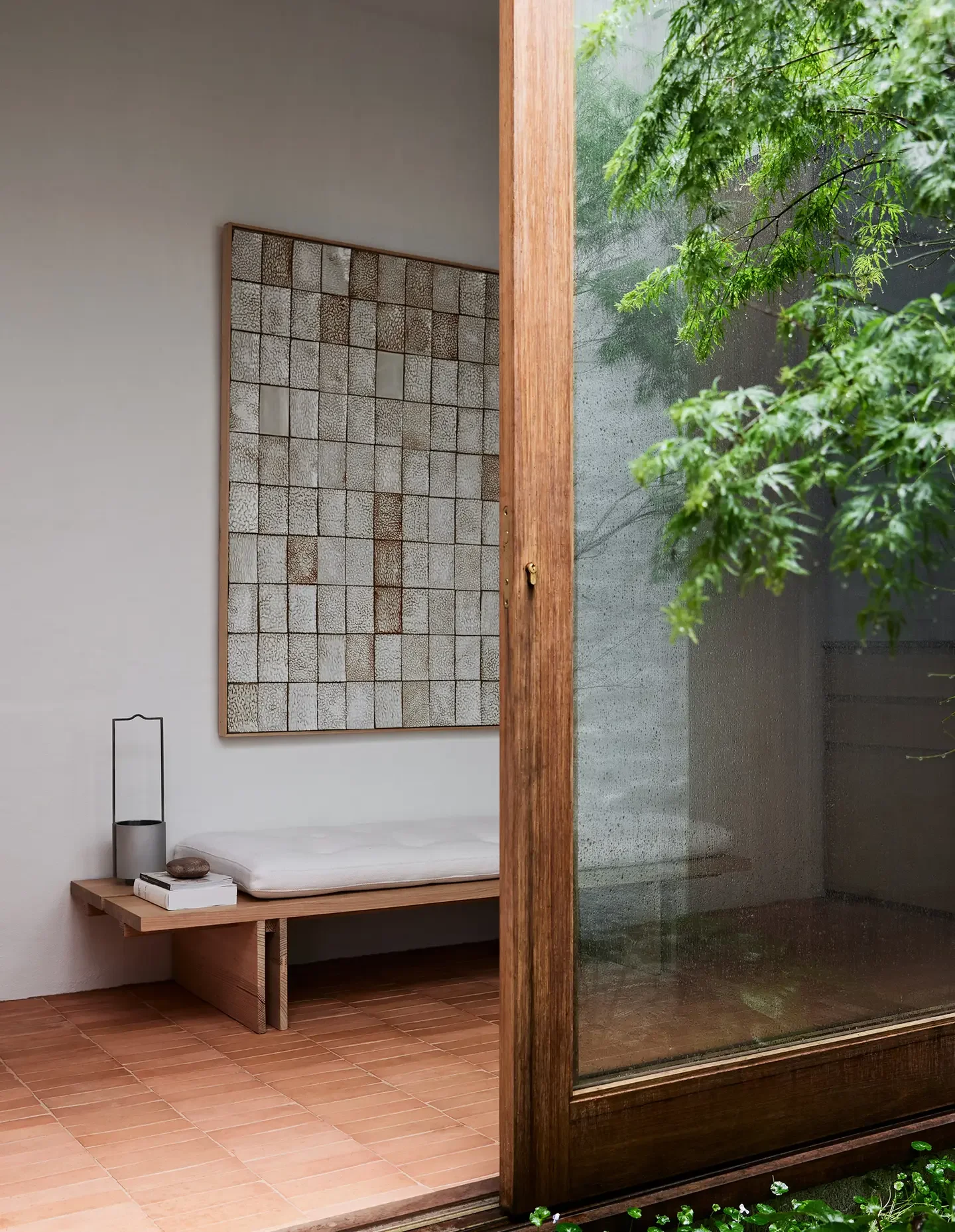
Photo by Alisha Gore
5. Give yourself permission to evolve
You don’t need to choose art you’ll love forever. You just need to choose art you’ll love, honestly, for a long time.
Your taste will evolve, and so will you. But art chosen with intention and not trend-panic and not “what will people think” tends to age with you instead of against you.
That’s when a home stops feeling styled and starts feeling personal.
👇 If you want an even clearer framework for choosing art, I break it all down in my video How to Choose Art for Your Home.
Cheers,
Reynard