The Secret To Making A Small Home Feel Bigger
Small spaces don’t struggle because they’re small.
They struggle because we design them the same way we’d design a big space.
When you live smaller, you have to design smarter.
Below are strategies I use over and over again, in my own home and in client homes, to create that same sense of ease and spaciousness.
1. Think Vertical, Not Just Horizontal
Most people decorate at eye level and below.
Sofas, sideboards, dressers - everything stops around waist height.
But look up.
There’s usually a whole extra 40% of usable space above eye level.
That’s your secret advantage.
Floor-to-ceiling shelving
Tall cabinets that reach the ceiling
Stacked storage or vertical bookcases
Even open shelving can make a world of difference - especially in kitchens and living rooms.
But here’s the secret. Don’t fill every shelf.
Leave breathing room. Place objects thoughtfully. Let negative space do its work.
When storage goes up the wall, the floor feels open.
And when the floor feels open, the whole room feels larger.
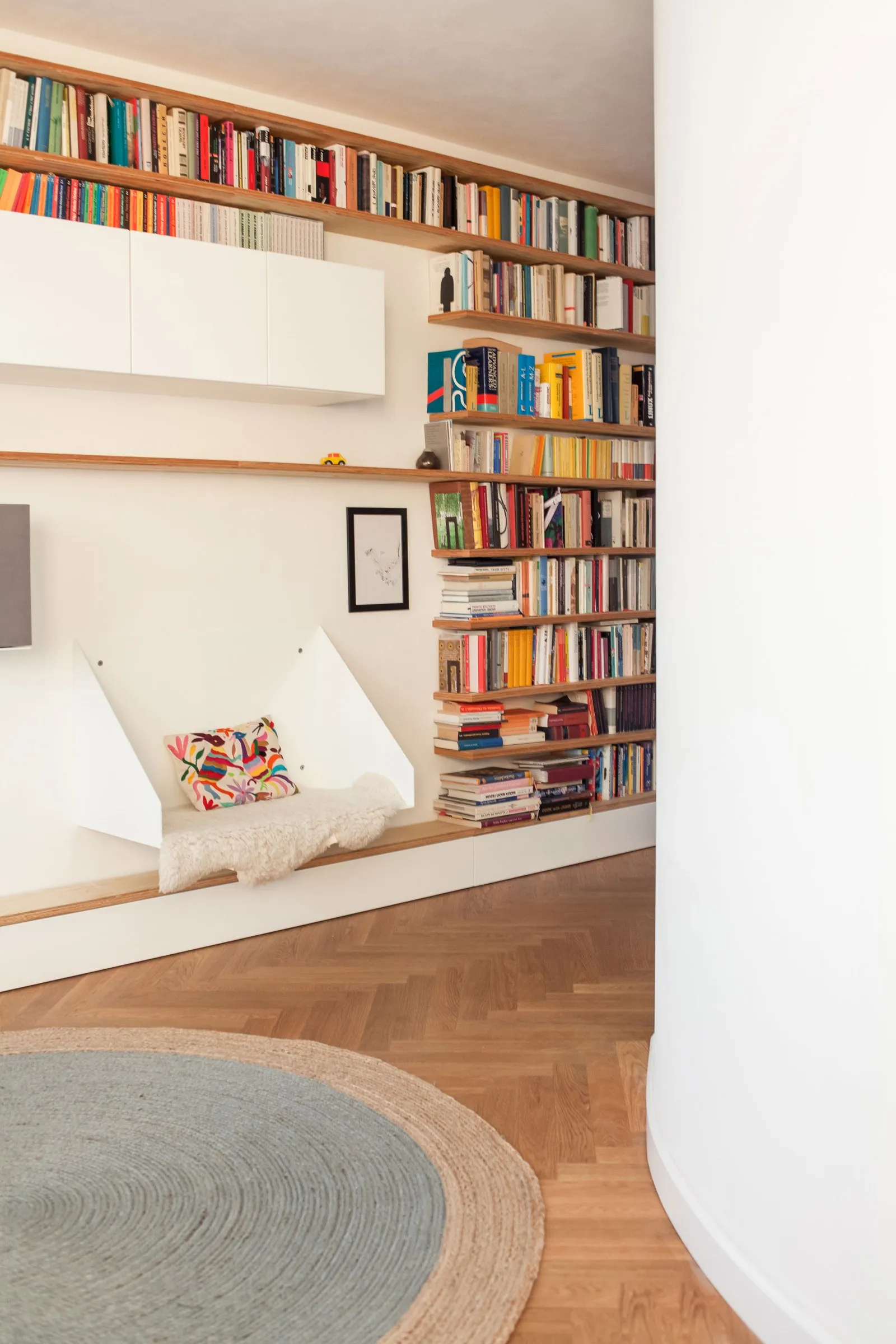
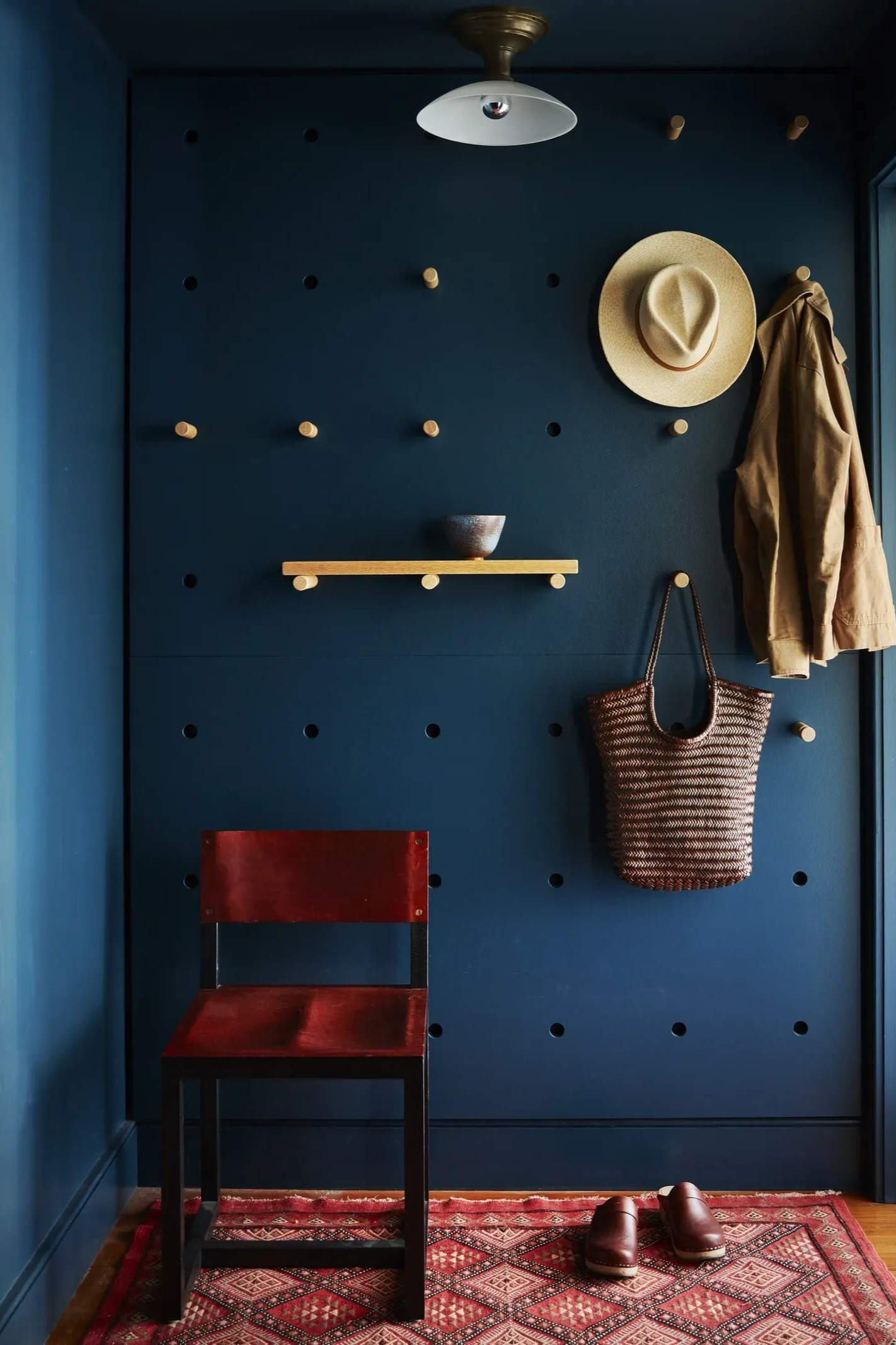
Credit: BY Architects (left) & Tim Lenz (right)
2. Use the “Forgotten Voids”
Small homes have hidden storage opportunities everywhere. Most people don’t look for them.
The awkward slope of the attic corner, the empty void under the stairs, the forgotten space behind the door, the shallow gap under the bed. All these can hold storage solutions.
Shallow roll-out bins under a sofa can store seasonal items.
Hooks on the back of a door can hold bags and coats.
These aren’t dramatic renovations. They’re quite reassignments of space.
They make your home work with you, instead of against you.
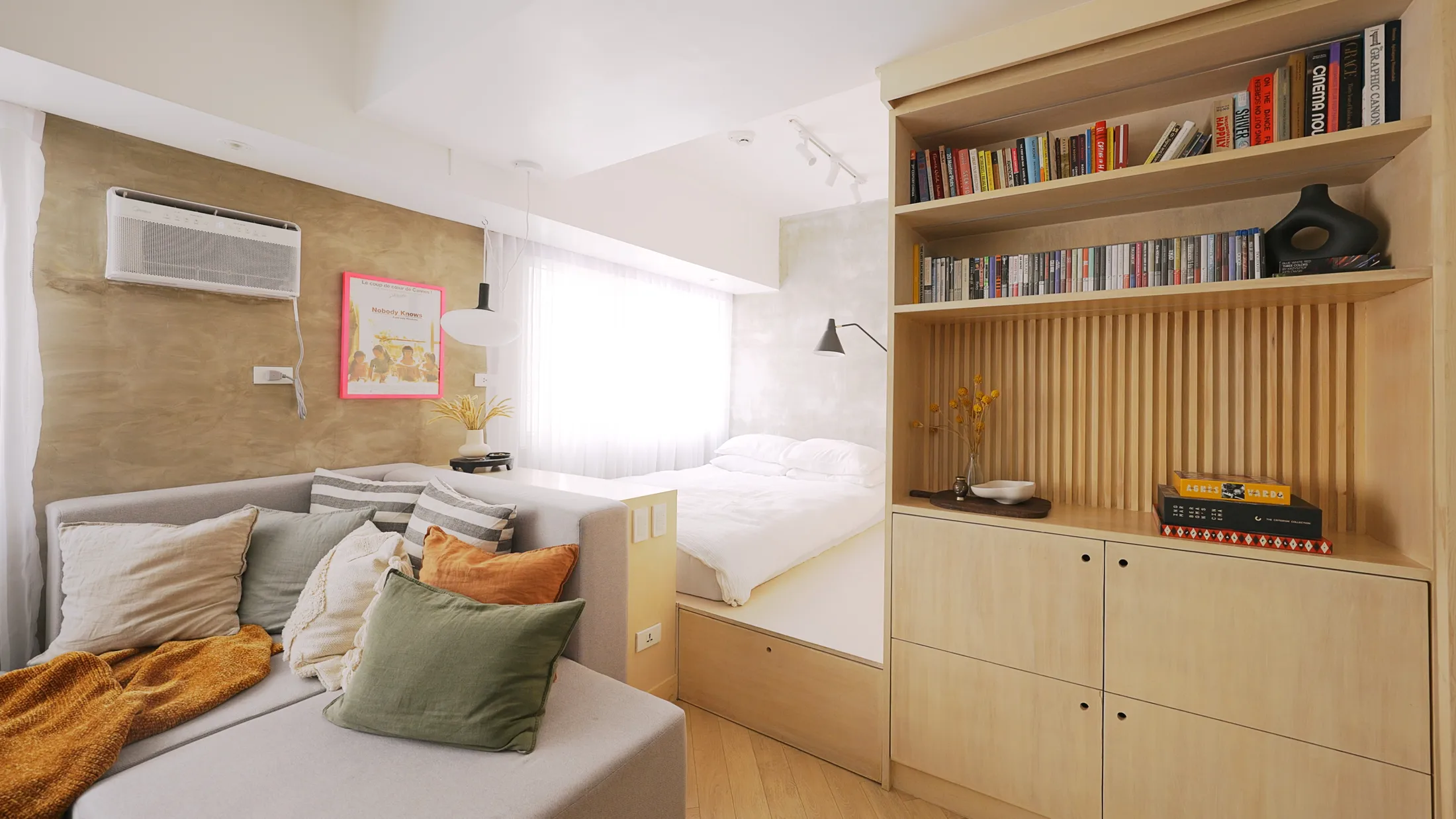
Never Too Small
Notice how this apartment has created storage space by raising the bed on a platform.
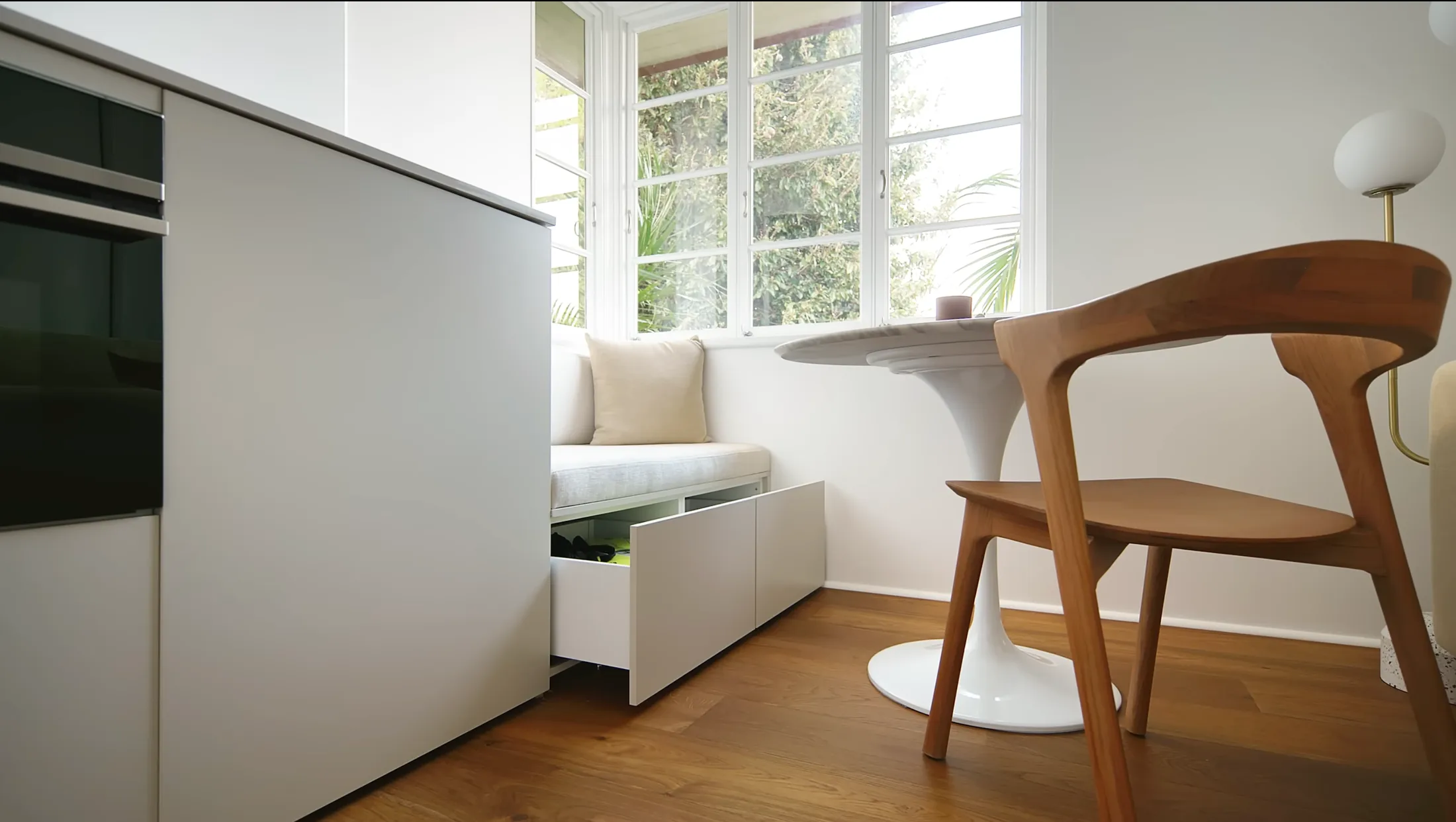
Cathy Schusler
While they’ve added integrated drawers at the base of this bench, which are concealed from view by the dining table and chair!
Workstead
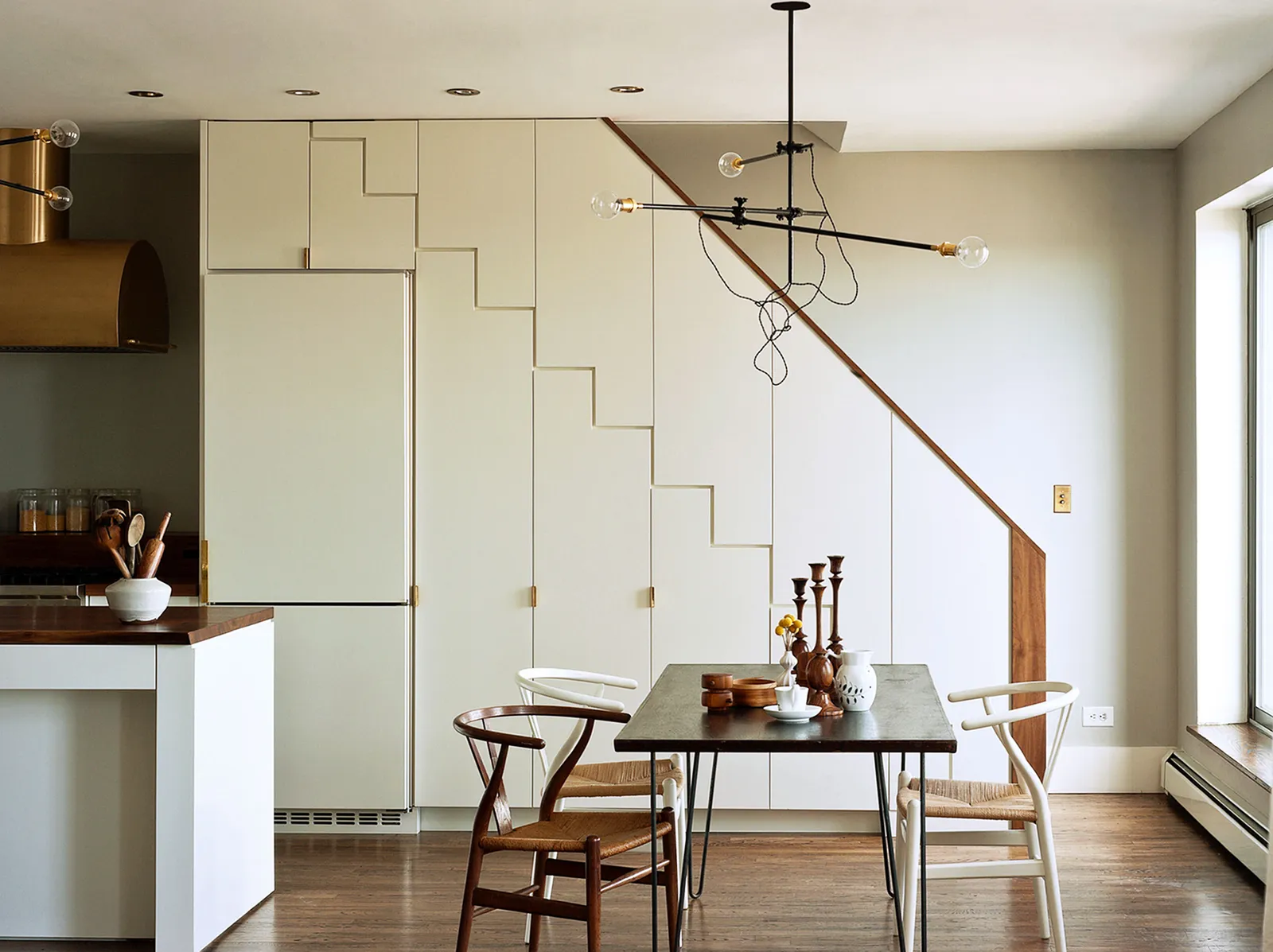
This home made great use of the void under its stairs by converting it into kitchen cabinets.
3. Soft Storage
Not everything needs cabinetry.
Baskets, fabric bins, and crates are the heroes of small spaces.
A woven basket can hold spare blankets.
A crate makes a lovely bedside book holder.
A canvas bin keeps shoes gathered near the entry.
These types of storage become part of the room’s design.
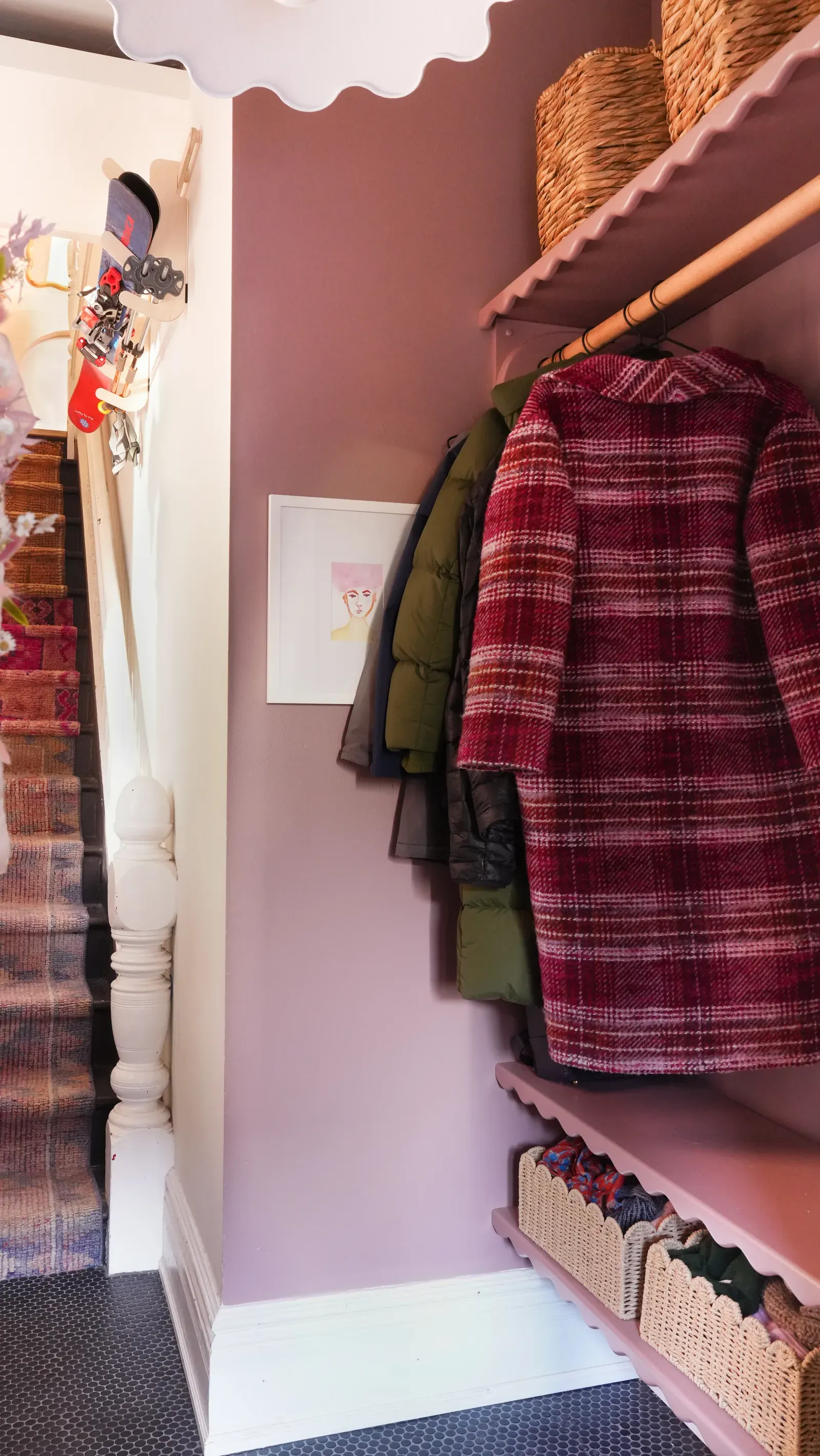
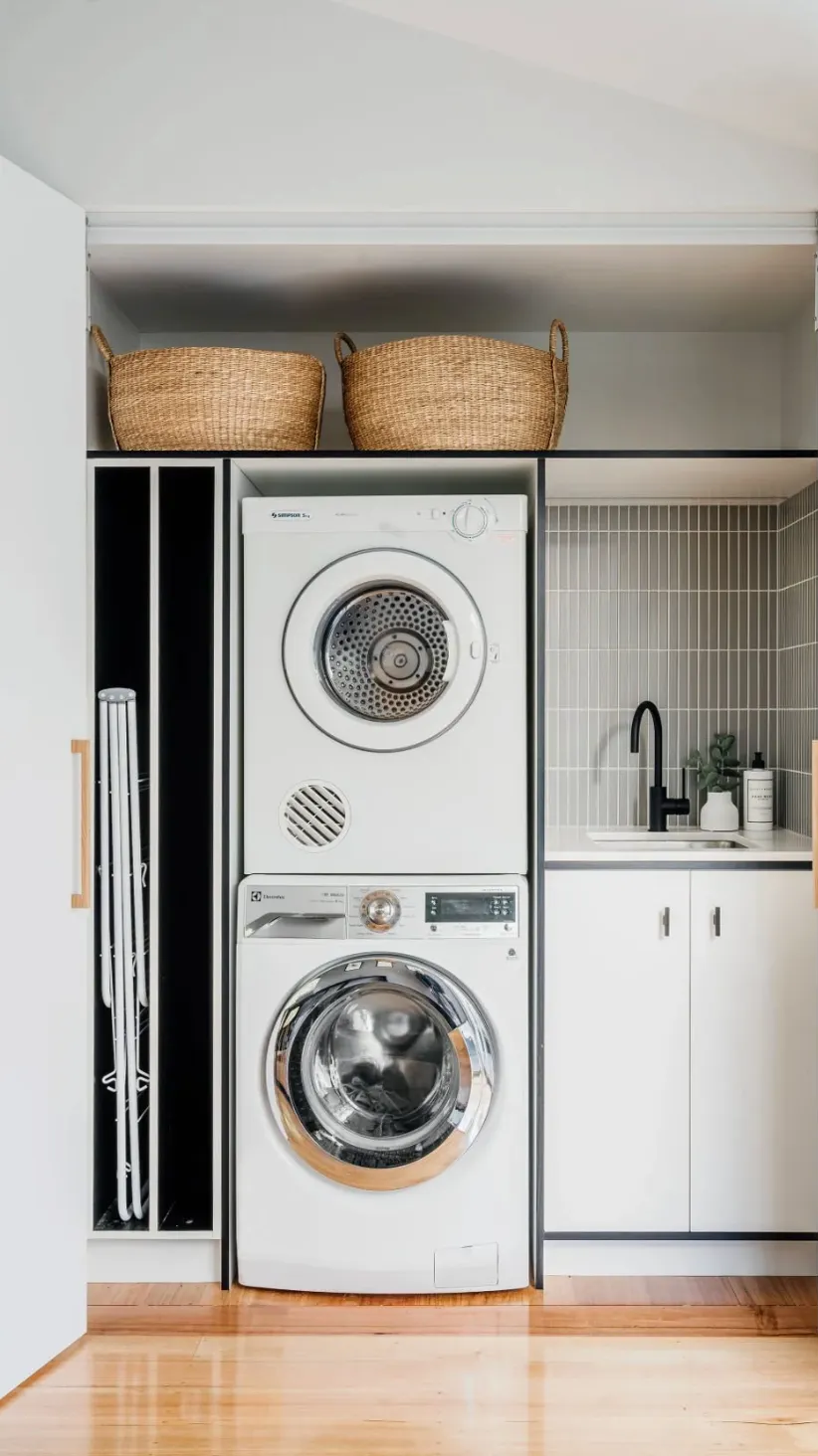
Credit: Carla Antonio (left) & Lydia Maskiell (right)
On the left, notice the cute scalloped-edged baskets they’re using and the woven baskets at the top. And they’re also making great use of vertical space, see the skis on the stairway wall.
4. Declutter Gently, Not Dramatically
Most decluttering advice is aggressive.
“Throw everything out.”
“Be ruthless.”
Here’s a softer, more realistic approach:
The Donation Box
Keep a box somewhere accessible.
Whenever you notice something you don’t love or use, just place it in the box. Donate when full.
Then you don’t have to make any decisions under pressure.
Transitional Storage
If you’re unsure about an item, don’t keep it or toss it.
Store it out of sight for 180 days.
If you don’t miss it, you’re ready to let it go.
Rotate Decor Seasonally
Small spaces get overwhelmed easily.
Not everything needs to be displayed at once.
Store what you’re not using.
Bring pieces back in when you want to.
This keeps your home feeling fresh, and you won’t have to constantly buy new things.
Cheers,
Reynard