Most homes have at least one space nobody ever thinks about.
The hallway you shuffle up and down. The staircase you climb while carrying laundry. The narrow entry you step through every single day without ever really seeing it.
Corridors, landings, staircases, and entry passages — nobody sits in them. They're just... there.
And that's exactly why they matter more than most people realise.
These are transitional spaces. And they shape how your home feels in ways that are easy to miss.
Here's the thing about in-between moments: your brain uses them to reset. Where one part of your day quietly hands over to the next.
When these spaces are designed well, your home feels calm and intentional.
When they're not, they become forgotten voids. Mildly draining every time you pass through them.
The problem is that because these spaces aren't destinations, most people skip designing them entirely.
But you move through these spaces constantly. Ten, fifteen, twenty times a day.
A dark, cramped corridor you pass through repeatedly becomes part of your baseline mood at home. Not dramatically, just subtly, constantly.
That's worth fixing. And it's not as hard as it sounds.
1. Set the pace with light
Lighting is the single most important thing to get right in transitional spaces.
Overhead glare rushes you through. Layered lighting slows you down.
A few options that work well:
Wall sconces along a hallway
A pendant that draws your eye upward in a stairwell
Step lighting up a staircase
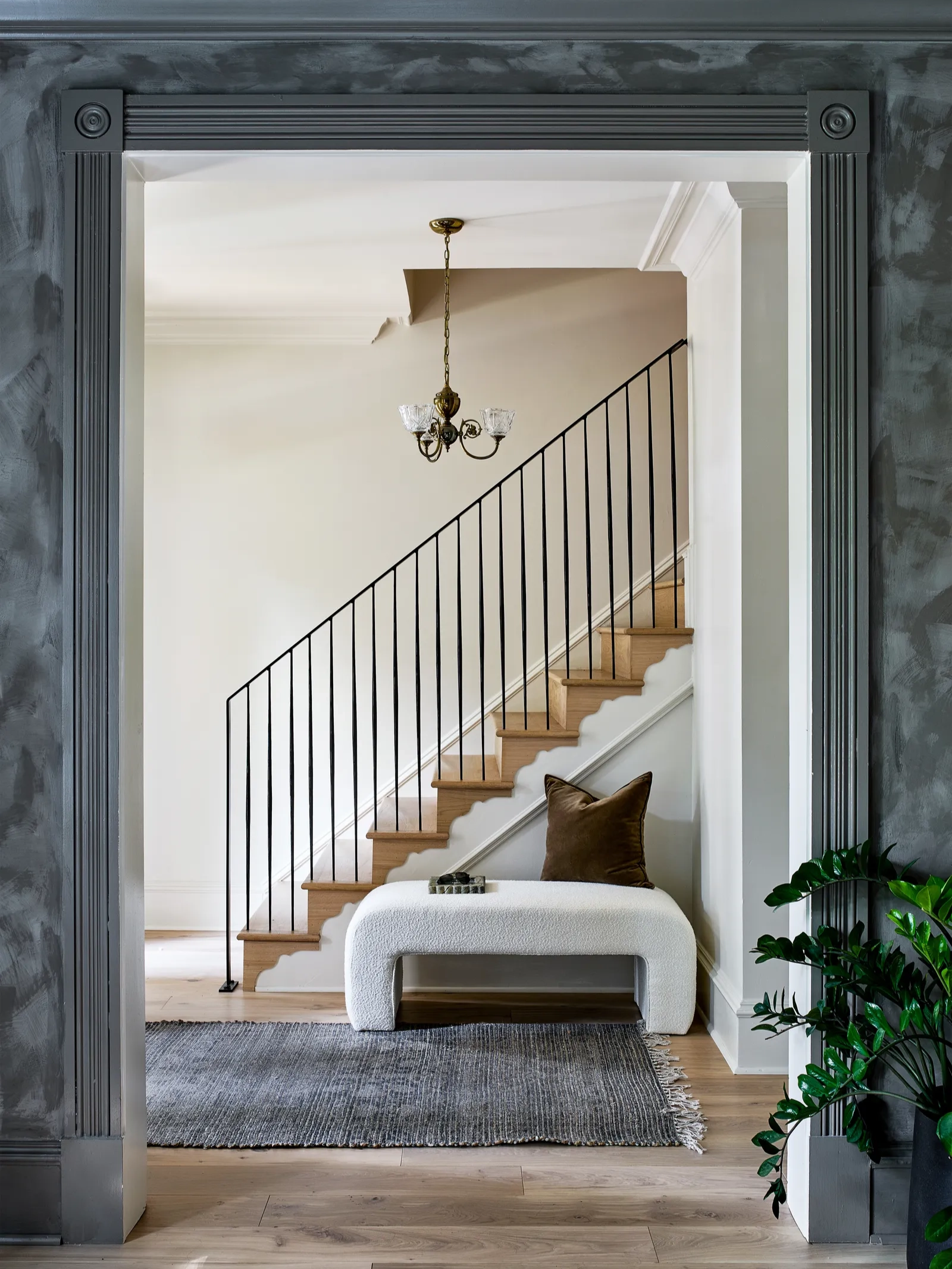
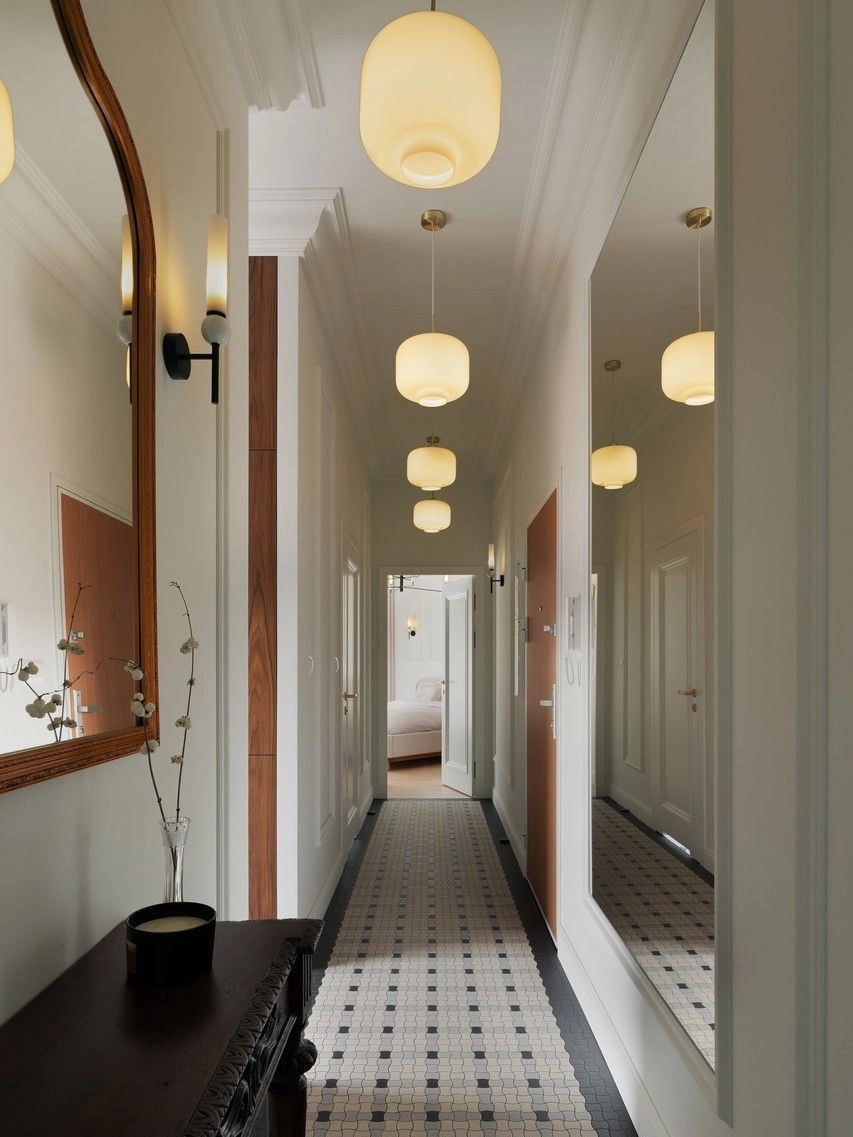
Stacy Zarin Goldberg (left) & Ewelina Idlewild (right)
The goal is to create warmth rather than brightness. You're not operating a surgery; you're moving through your home.
2. Give the eye somewhere to land
A corridor without a focal point is just a tunnel.
It doesn't need much. A single large artwork at the end of a hallway. A mirror that reflects light. A sculptural light fitting. Even a door painted in a contrasting colour.
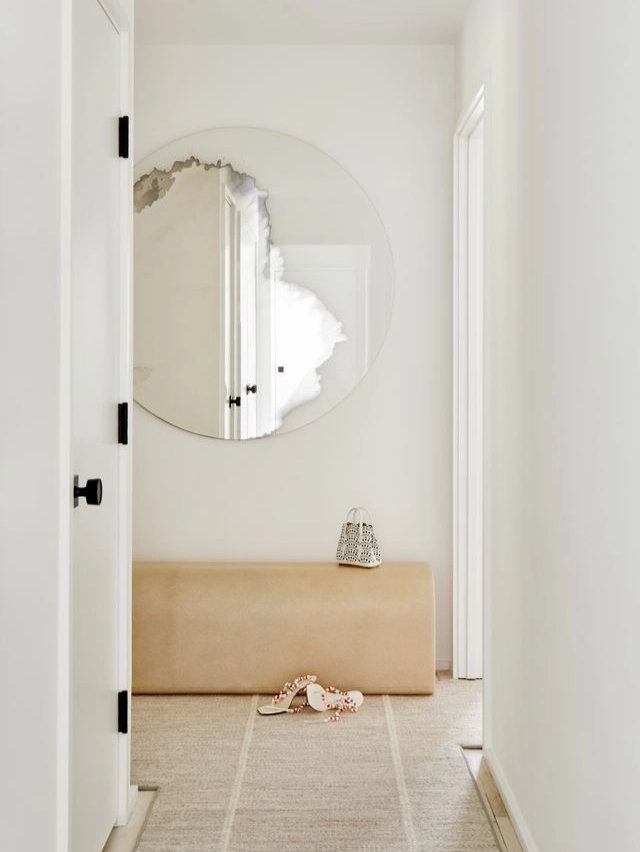
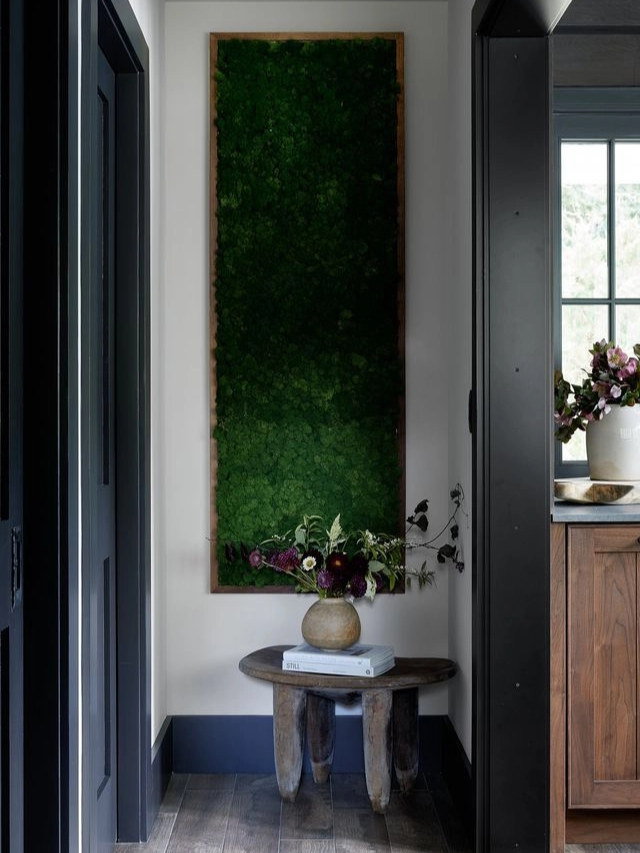
Rikki Snyder (left) & Sean Litchfield (right)
With a focal point, you're no longer just moving through a space — you're moving toward something. That subtle shift alters the entire space's ambiance.
3. Rhythm and repetition
Transitional spaces are about movement, and movement responds well to rhythm.
This is especially true in longer hallways.
Evenly spaced wall lights, a series of framed artworks, vertical panelling, a consistent runner pattern — these create a sense of order. And order creates calm.
It's the difference between a corridor that feels chaotic and one that feels composed.
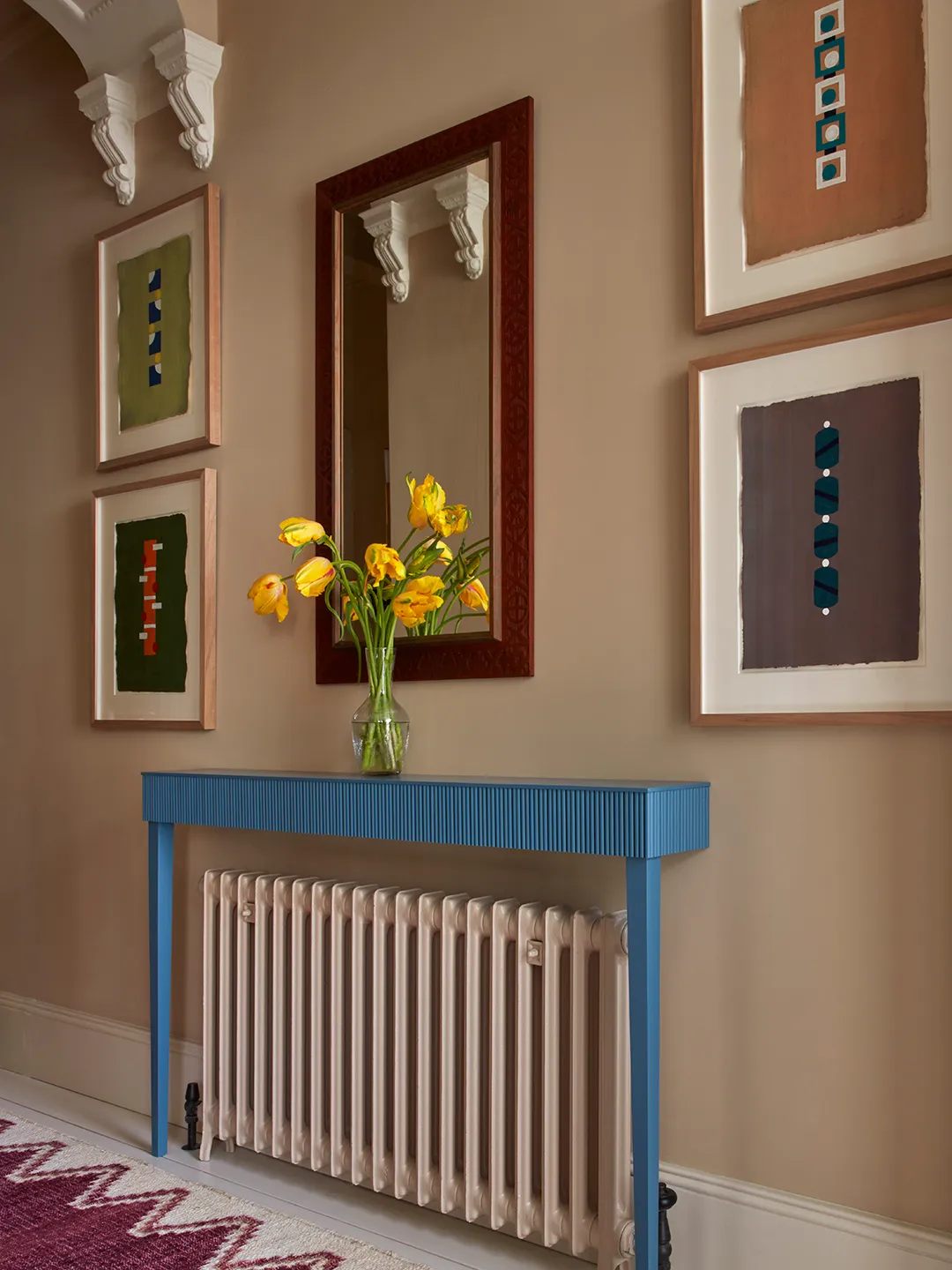
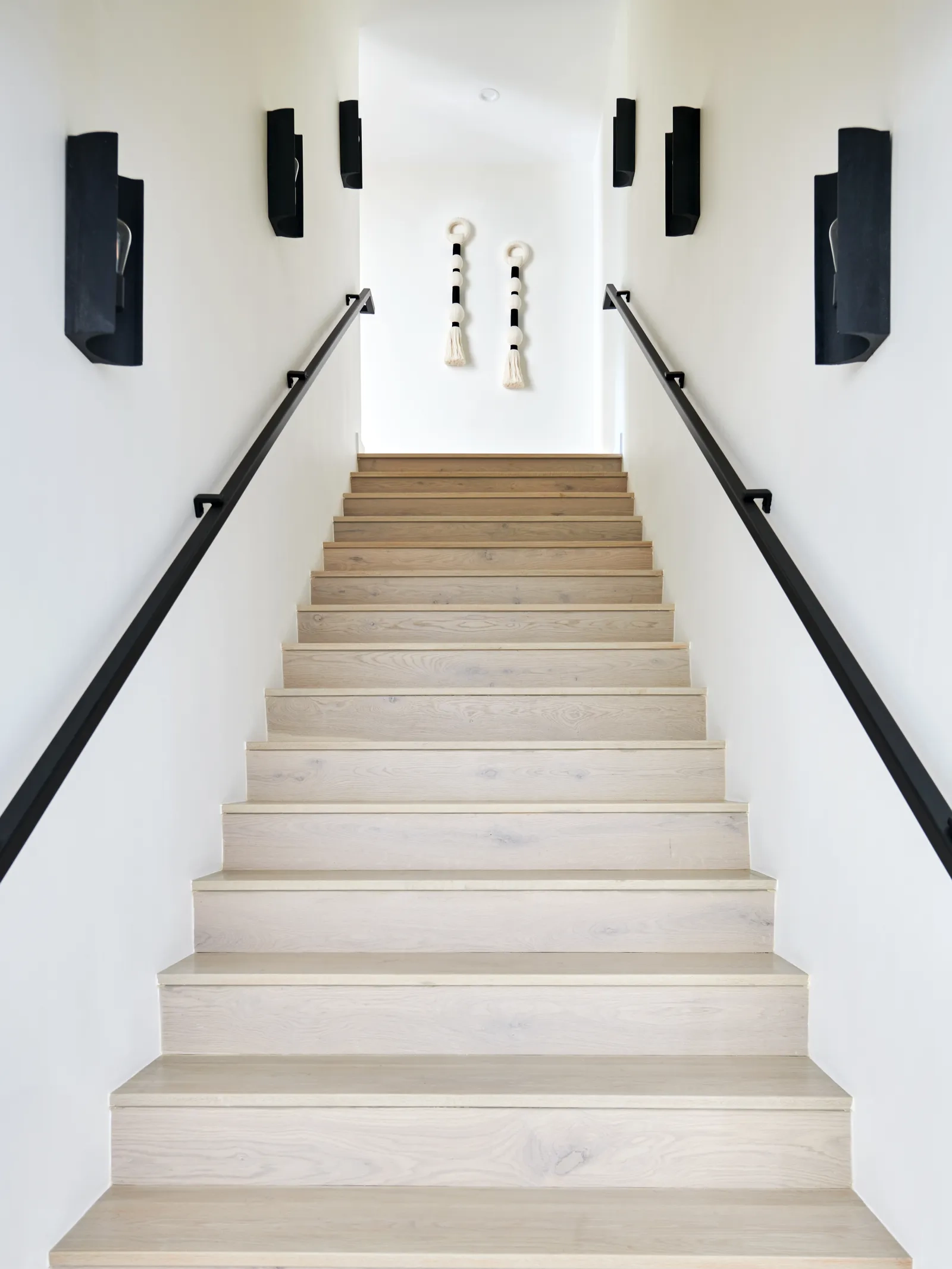
James McDonald (left) & Lauren Taylor (right)
4. Embrace contrast
This is where people often play it too safe.
If every room in your home is equally bright, equally open, equally white, nothing feels special.
A slightly darker, moodier hallway makes the living room beyond feel brighter. A narrow, cocooning stairwell makes the bedroom landing feel expansive.
That's spatial psychology at work — and transitional spaces are the ideal place to experiment with it.
You're not sitting in these spaces for hours. You're moving through them. So you have more permission to be bold:
Deeper paint colours
Textured wallpaper
Timber panelling
Lower, warmer lighting levels
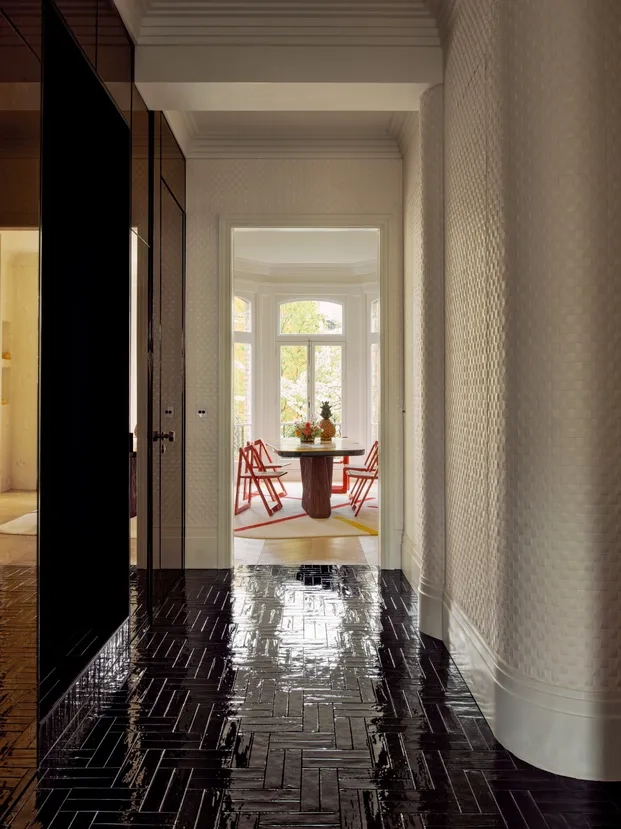
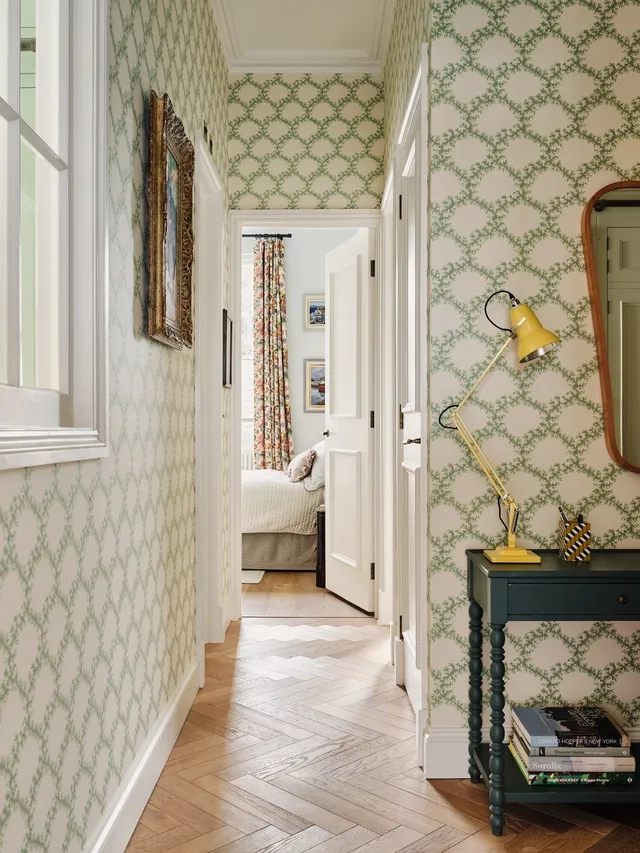
Michael Sinclair (left) & Dean Hearne
The hardest part of all of this is that most people can't visualise it until it's done. That's why they play it safe and end up with white walls and a ceiling light.
I built Room Visualizer™ AI to fix exactly that. Upload a photo of your space, and it shows you what it could look like before you commit to anything.
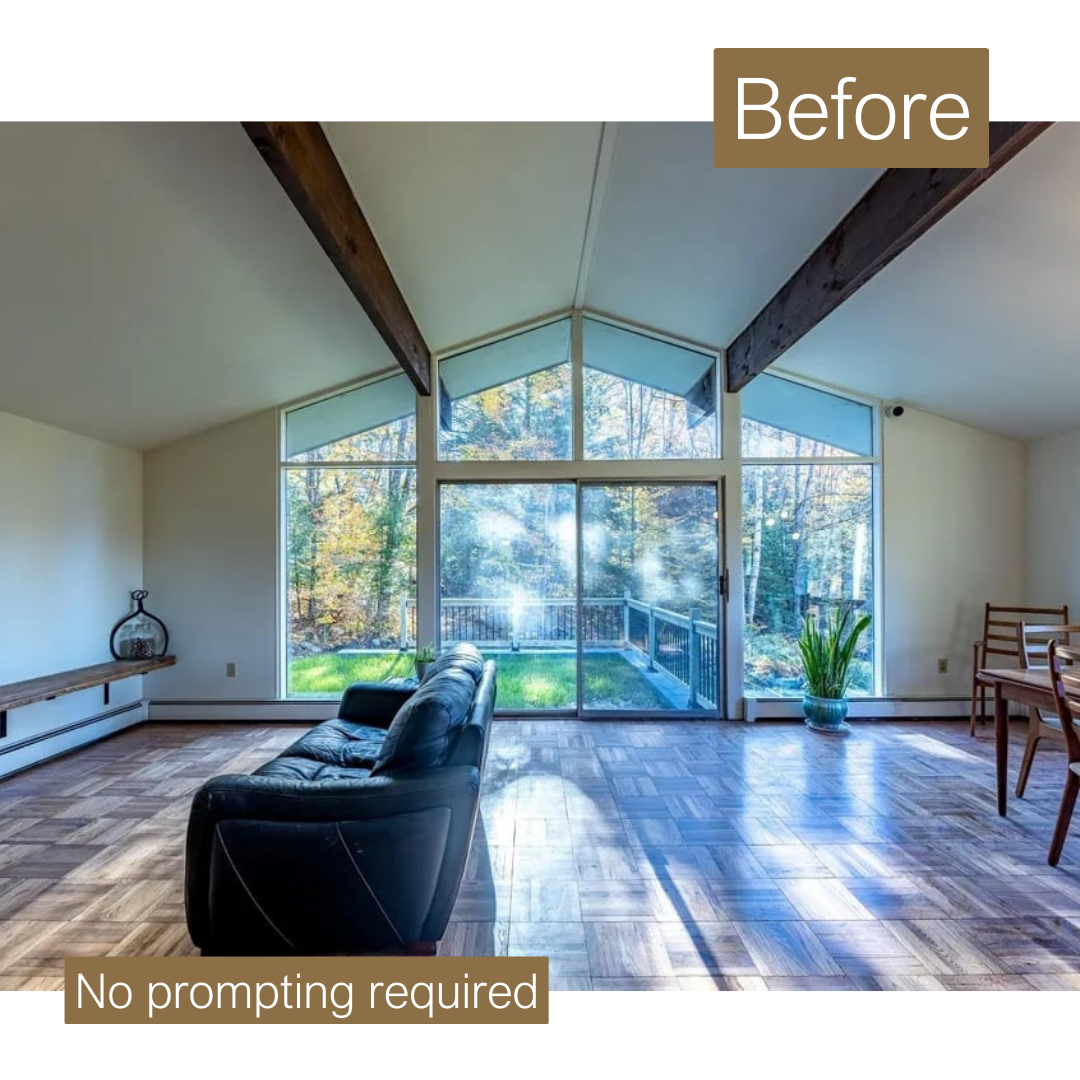
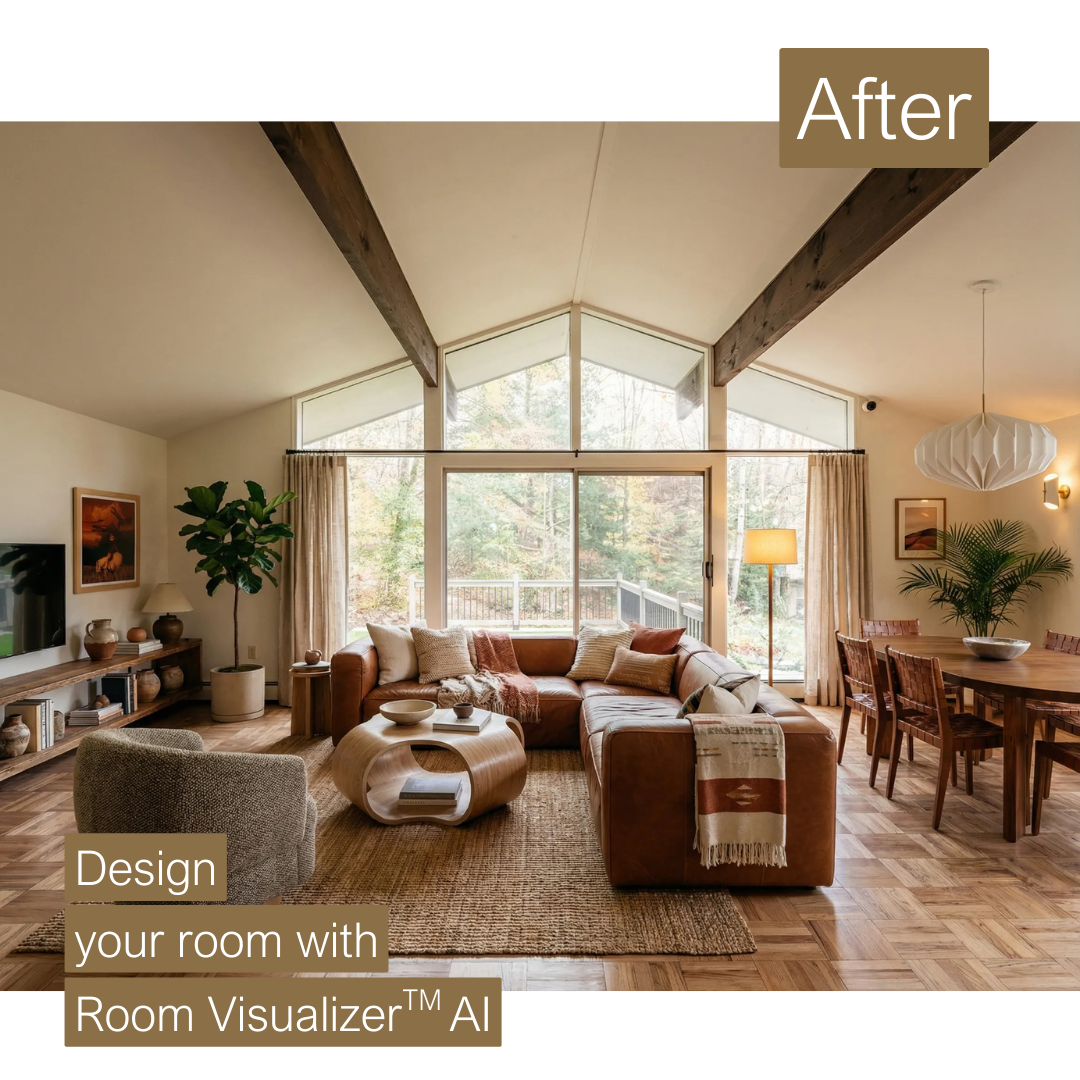
It goes public in two weeks. Join the waitlist here if you want first access.
5. Design the emotional shift
Ask yourself: what are you moving from and to?
Busy to calm? Public to private? The rest of the house to the bedroom?
Your transitional spaces can prepare you for that shift. Warmer lighting leading to a bedroom. Artwork that becomes simpler and more minimal as you approach private spaces.
It makes the transition feel smoother — even if it happens without you consciously noticing.
You might also be interested in this video that pairs nicely with this topic
Cheers,
Reynard